If you searched for a Twilio alternative, the useful question is not “which company should replace Twilio?” The better question is: should you replace Twilio, or just make Twilio easier to use?
That distinction matters because many small businesses do not actually have a Twilio infrastructure problem. They have a usability problem.
Twilio can power calls, SMS, RCS, WhatsApp, phone numbers, and messaging workflows. But Twilio is still a developer platform. It gives you the communications building blocks, not always the simple business phone app your team wants to open every day.
First, diagnose the real problem
| If this is your issue | You probably need |
|---|---|
| Twilio pricing is the blocker | API provider comparison |
| Your team wants different API coverage | Twilio infrastructure alternative |
| You need a campaign-first SMS tool | SMS marketing platform |
| You want a hosted phone system, not Twilio | Business phone system |
| Your Twilio number works, but feels too technical | No-code app layer like Mango |
Start with the infrastructure question first. If your real issue is Twilio pricing, API coverage, deliverability, or developer workflow, then a direct API alternative may make sense. That is when you compare providers like Telnyx, Plivo, Vonage, SignalWire, Bird, or Infobip. Those companies compete with Twilio as communications infrastructure.
But switching API providers is not a small change. You may need to port numbers, reconnect SMS and voice workflows, retest message delivery, update compliance settings, and retrain the people who depend on the system.
That work is worth it when Twilio itself is the blocker. It is unnecessary when the blocker is that Twilio is powerful but hard to use without code.
What many businesses actually want
That is where many “Twilio alternative” searches get misread. A business searching for a Twilio SMS app, Twilio softphone, Twilio mobile app, Twilio phone system, or app for a Twilio number may not want to replace Twilio at all. They may want to keep Twilio and add a no-code app layer that makes the Twilio number usable for real business communication.
A usable business phone setup means your team can do the everyday work without opening Twilio Console or building custom software.
| Daily workflow | What the app layer should make simple |
|---|---|
| Calls | Make and receive business calls from a Twilio number |
| SMS | Read and reply from a simple mobile inbox |
| RCS and WhatsApp | Keep richer customer conversations in the same workflow |
| Voicemail | Handle missed calls without custom routing work |
| Business hours | Separate work time from personal time |
| Message history | See context before replying |
Where Mango fits
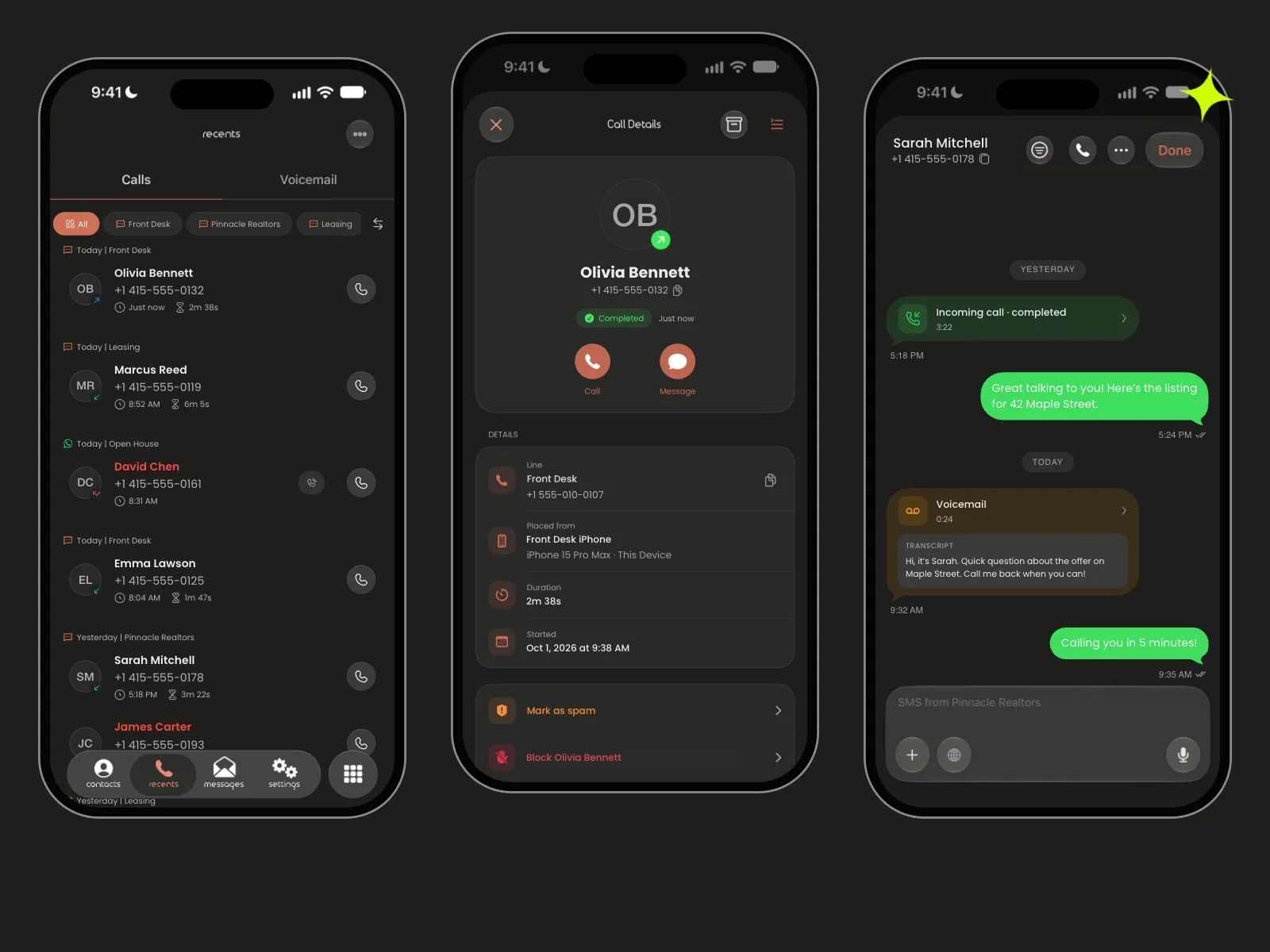
That is the role Mango is built for. Mango does not replace Twilio infrastructure. It sits on top of Twilio as a no-code app layer, turning your Twilio number into an iOS business phone system for calls, SMS, RCS, WhatsApp, voicemail, and everyday customer communication. Twilio remains the communications engine. Mango becomes the interface your team actually uses.
Quick comparison
| Category | Examples | Best when |
|---|---|---|
| API infrastructure | Telnyx, Plivo, Vonage, SignalWire, Bird, Infobip | You want to replace Twilio as the backend |
| SMS marketing | SimpleTexting, TextMagic, SlickText, EZ Texting | You need campaign tools more than phone workflows |
| Hosted phone system | OpenPhone, Dialpad, RingCentral, Aircall | You want to leave Twilio entirely |
| No-code Twilio app layer | Mango | You want to keep Twilio and make it usable |
So the decision becomes simpler. If you need new infrastructure, compare API providers like Telnyx, Plivo, Vonage, SignalWire, Bird, and Infobip. If you need an SMS marketing platform, look at tools like SimpleTexting, TextMagic, SlickText, or EZ Texting. If you want to leave Twilio entirely for a hosted business phone system, compare OpenPhone, Dialpad, RingCentral, or Aircall.
But if you already have a Twilio number and your main frustration is usability, the better answer is usually not to migrate. It is to add the missing app layer. For many small businesses, the best “Twilio alternative” is not another backend provider. It is a simpler way to use Twilio without building software.
That is the practical rule: replace Twilio when the infrastructure is wrong; keep Twilio and use Mango when the experience is wrong.